

Who you need on your team to flip a house in Australia
By Nicholas Gee··7 min read
The story people tell themselves about flipping is a solo one: you find the deal, you swing the hammer, you bank the profit. It is a nice story, and it is wrong, because who you need on your team to flip a house is a real list of people, and getting it right is what separates a clean profit from a mess. Every flip I have run has been carried by a handful of specialists who each do one job well, and the deals that went sideways were usually the ones where I was missing someone or picked the wrong one in a hurry. So before you get lost in suburbs and colour palettes, it is worth being clear about who each of them is, what they cost, and the order you should line them up in.
This is general information, not financial or legal advice, but it is the honest version of who actually does the work behind a finished flip.
Why flipping a house is a team sport
A flip is really four jobs stacked on top of each other: buy well, borrow sensibly, renovate to a resale standard, and sell for what the work is worth. No one is good at all four, and the two that trip up beginners the most (the finance and the tax) are the two you should never do off the top of your head. Your job is not to be the expert in each seat. It is to pick good people for the seats, brief them properly, and keep the whole thing pointed at a number you have already worked out. The margin on a flip is thin enough after stamp duty, holding costs and tax that a single weak player can eat all of it.
Who you need on your team to flip a house, stage by stage
Think of the team in the four stages of the deal. Some people you need on every flip, some only when the deal calls for it.
The buying team
A mortgage broker. Unless you are paying cash, this is the first call, because your finance sets your ceiling. A good broker who understands short-hold and renovation lending will tell you what you can actually borrow and on what terms before you fall in love with a listing. In Australia the broker is generally paid by the lender, not by you, through an upfront commission of roughly 0.3 to 0.5 per cent of the loan, so the service is usually free to the borrower; if a broker does charge you a fee they have to set it out in a written quote you sign first. I have written separately about how flips actually get financed, because a standard owner-occupier loan is rarely the right tool.
A buyers agent (optional, but worth it early). A buyers agent finds and negotiates the purchase for you, which matters because the margin on a flip is made at the buy. Their fee is usually either a fixed amount, commonly a few thousand dollars up to about $15,000, or a commission of one to three per cent of the purchase price (the buyers agents association notes many charge around two per cent plus GST). That is a real cost against your margin, so I only use one when I am buying in an area I do not know or cannot get to. If you are hunting deals yourself, the Finder tool and a disciplined process do a lot of the same shortlisting.
A conveyancer or property solicitor. These are the people who actually transfer the title, check the contract, and flag easements, covenants and zoning nasties before you are committed. Budget roughly $1,200 to $3,500. Do not skip the contract review to save a few hundred dollars, because the things they catch (a caveat, a heritage listing, an unapproved extension) are exactly the things that turn a flip into a money pit.
A building and pest inspector. A combined building and pest inspection runs about $400 to $800 and is the cheapest insurance you will ever buy on a flip. Their report is what tells you whether your reno budget is a cosmetic number or a structural one, which is the difference between a profit and a loss.
The building team
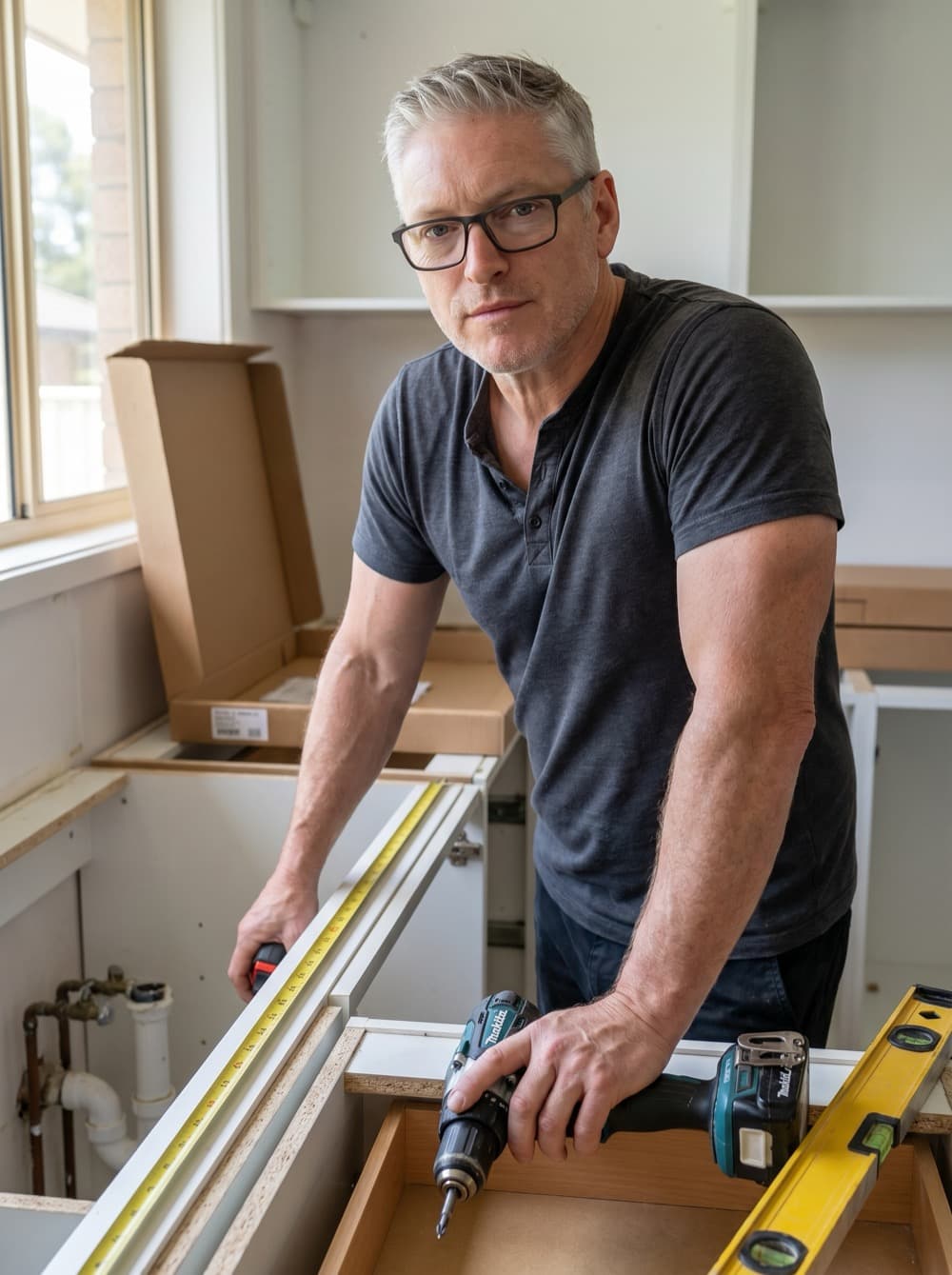
A builder, or your trades direct. On most cosmetic-to-mid flips I engage trades directly and project-manage the job myself; on a structural reno I bring in a licensed builder and let them carry the program. Either way, the practical business of running the reno, sequencing trades and defending a contingency, is the stage that quietly hands the margin back if it drifts.
The trades you cannot DIY. Electrical, plumbing and gas work must be done by licensed tradespeople everywhere in Australia, even if you are an owner-builder, and unlicensed work can void your insurance and fail a pre-sale inspection. That ties into whether you should hold an owner-builder permit at all, which has real thresholds and a resale-disclosure trap that catches flippers.
The money team
An accountant who knows property. This is the seat beginners leave empty and regret. A genuine flip is almost always taxed as ordinary income on revenue account, not as a capital gain, which means no 50 per cent CGT discount and a very different set of numbers. An accountant sets up the right ownership structure before you buy, keeps your GST position straight, and makes sure the profit you modelled is the profit you keep. Getting this seat right before the first purchase is worth more than any renovation decision you will make.
A quantity surveyor (on bigger jobs). For a larger or structural project a QS gives you a defensible cost estimate up front and can settle disputes about variations later. On a small cosmetic flip you can lean on cost guides and the reno estimator instead.
The selling team
A selling agent. The right agent knows your suburb's buyers and prices your finished product to the top of what the comps support, not a hopeful number above them. Commission is typically around two to two and a half per cent in the metros, higher regionally, and it is a line you must have in your feasibility from day one.
A stylist (usually worth it). On a flip the whole exit rides on an owner-occupier's reaction to the finished house, which is why property styling usually pays for itself by lifting the sale toward the top of the range and shortening the days on market. It is a selling cost, not a rescue for a thin deal.
Keep your team straight across deals
Here is the part nobody warns you about. Your first flip, you can hold the whole team in your head. By your third, you are running two deals with overlapping trades and you genuinely cannot remember whether the good plumber was on the Newcastle job or the other one. Most flippers end up with their network scattered across a phone, an inbox folder and a notes app, and they rebuild it from memory every time.
That is the exact problem the Black Book in FlipPro is built to solve: a private, searchable directory of your tradies, suppliers, agents and advisers, with quote history, performance notes and whether you would use them again. Then each flip lives in its own project workspace that ties the right contacts, budget and documents to that specific deal, so the plumber from this job does not get lost the moment you start the next one. A team is only an asset if you can find it again.
How I line up the team before the first deal
If you are starting out, do not wait until you have a contract to assemble people. The order I use is: broker first, so I know my ceiling; accountant next, so the structure is right before I buy anything; conveyancer and inspector lined up so I can move fast when a deal appears; trades or a builder as the reno scope firms up; agent and stylist by the time the reno is nearly done. Buyers agent only where I am out of my depth on the buy.
The through-line is that every one of these people costs money, and every cost belongs in the feasibility before you commit, not as a surprise later. That is the whole job FlipPro does on a real listing: it prices the buy, the reno, the hold and the sale into one view so your team's fees sit inside a margin you have already checked. See a full worked sample analysis, or look at the pricing and run your next deal before you make a single call. Get the team right and the flip mostly runs itself. Get it wrong and no colour palette will save you.
This is general information only and not financial, tax, legal or real-estate advice. Fees, commissions and licensing rules vary by provider, state and deal, and the figures above are indicative ranges from sources current at the time of writing. Do your own due diligence and get professional advice before you commit.
Written by
Nicholas Gee
Founder of FlipPro AI. A 30-year IT director and hands-on Australian property renovator, flipper and small developer, Nicholas built FlipPro out of the feasibility spreadsheets he ran on his own deals.
More about Nicholas →Related reading
Should you flip houses in a company or trust in Australia?
Should you flip houses in a company or trust, or your own name? How each option changes the tax rate, asset protection and land tax on a flip.
Read post →What is ARV? After repair value explained for Australian flippers
What is ARV (after repair value) for a flip? How to work it out from comparable sales, the mistakes that sink deals, and why it differs from a bank val.
Read post →How to flip a house with no money in Australia
How to flip a house with no money in Australia, honestly: joint ventures, existing equity and vendor finance, plus the catch that burns beginners.
Read post →Want this whole calculation done in three minutes?
Open the FlipPro workspace, paste the listing and carry the result into feasibility, budgets and a live project.
Free to search and browse. Eligible new Pro and Elite customers see the 7-day trial in checkout.